Foamy Pool Water and How to Fix It
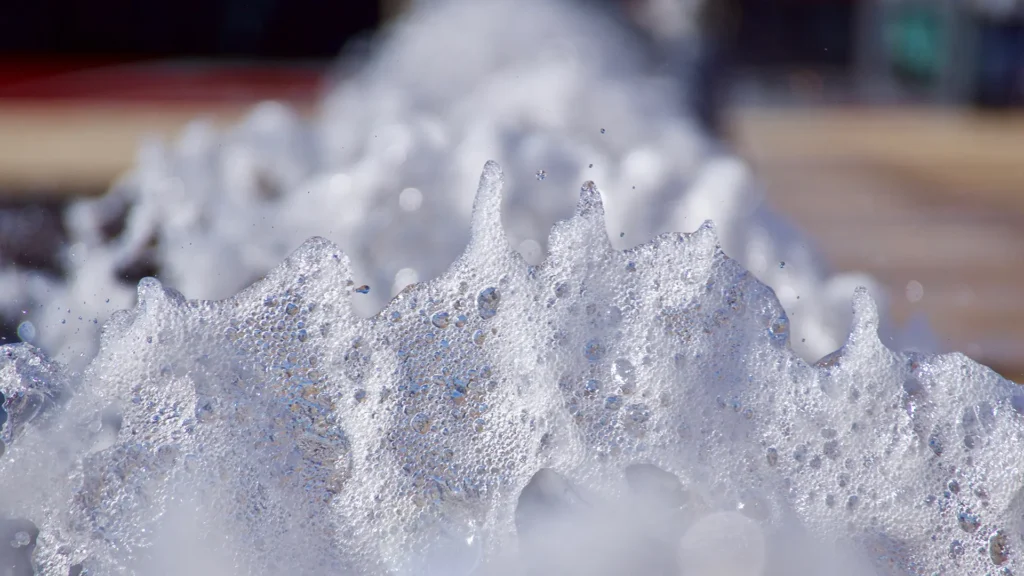
Foam in pool typically indicates unbalanced water chemistry or the presence of organic contaminants. Though it’s not usually a significant safety issue, it can be unappealing for swimmers. Foam can result from low calcium hardness, a high level of organic matter from swimmers or debris, air leaks in the pump or plumbing, and overuse of pool chemicals like algaecides.
To eliminate pool foam, identify and address the underlying issue, which involves balancing your water chemistry, cleaning or backwashing the filter, reducing organic material, and sealing any air leaks.
Consistent water balance and regular upkeep are essential for preventing foam and ensuring your pool water remains clear.
Top Causes of a Foamy Pool
These bubbles can form for various reasons, including agitation of the water or the presence of certain substances that can lead to frothiness. As a result, the overall experience of being in the pool can be quite different when there is foamy water compared to when the water is calm and clear.
Causes of pool foam can include:
- Hair and body care products, such as shampoo, gel, hairspray, and soap
- Body lotion, deodorant, and make-up
- Laundry soap and detergents
- Algaecide
- Cheap water care products
- Overuse of water care products
If you have recently used an algaecide, treated your pool water, or had people swimming in your pool, that may have been the trigger that caused your foamy pool water.
How to Prevent Your Pool Water from Getting Foamy
Rinse Off Before Swimming
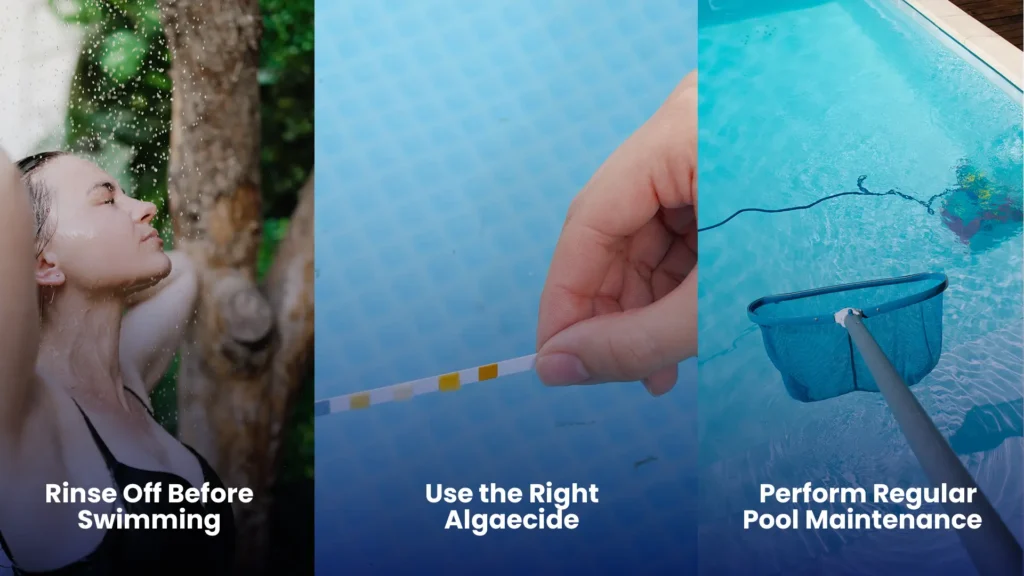
Have family members and guests shower before using the pool to remove any make-up, soap, or lotion. You may want to encourage them to rinse off while wearing their bathing suit, to avoid bringing any laundry detergents from their suit into the water.
If your pool area permits, why not consider installing an outdoor shower? This simple addition can make it much easier for swimmers to rinse off before and after swimming, to avoid tracking pool water through indoor areas.
Use the Right Algaecide
When buying an algaecide, choose a high-quality option labeled “non-foaming.” This will not only prevent foam in your pool but also ensure you’re using a top-notch product for the task.
Perform Regular Pool Maintenance
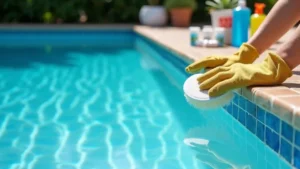
Cleaning and treating your pool water regularly will help to maintain proper chemical levels and ensure that it is correctly balanced. To improve the quality of your pool, get in touch with Amenity Pool Services to learn more about pool and spa services, maintenance, and cleaning.
Treatment for Foam in Your Pool

If the foam in your pool is caused by a low-quality algaecide, time is your best treatment. Simply give it a few days, and the foam should clear up on its own. If not, you may want to consider consulting a pool service expert from Amenity Pool Services for help.
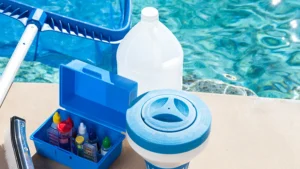
- Use test strips to check water levels, pH, and alkalinity if you suspect pool foam is from impurities.
- Aim for a pH level between 7.4 and 7.6.
- Target an alkalinity range of 100 to 150 ppm.
- Add water care products to adjust and balance your water if levels are not within these ranges.
Pro Tip: Shocking the pool with chlorine or a non-chlorine shock may do the trick. We suggest adding the suggested amount at dusk and allowing your pool to run overnight.
If in a few days, your pool water looks soapy and still foamy, it’s time for an anti-foam chemical. You should be able to purchase this at your local swimming pool store.
Is It Safe to Swim in Foamy Pool Water?
Let’s dive into the bubbly question:
According to Pool Research, it can be perfectly safe to swim in a pool with foam as long as your chemicals are correctly balanced. However, to ensure that the water remains crystal clear and visually appealing, it is advisable to remove the foam from the pool regularly.
GreenyPlace similarly assures users that while foamy water might feel uncomfortable or sticky, it is generally safe for swimming. They highlight that even though foamy water is usually not dangerous, it is wise to remove the foam quickly to ensure a high-quality and comfortable swimming experience.
Ready to Enjoy a Crystal-Clear, Foam-Free Pool?
Don’t let foamy or cloudy water stop you from enjoying your pool. At Amenity Pool Services, we offer more than just cleaning. We provide full care, including regular checks, careful chemical balancing, equipment repairs, and ongoing maintenance made for your pool. Contact us today to set up your pool service and enjoy clear and safe water all season.
FAQ's
1. Why is my pool foamy?
Your pool might be foamy because the water chemistry is off due to the type or amount of chemicals you’re using, or because of air leaks. Common culprits include lotions, soaps, detergents, and low-quality algaecides.
2. Why does my pool have bubbles?
Bubbles in your pool can be caused by air leaks in the plumbing or pump, or by agitation of the water mixed with certain substances. if the bubbles stick around and make a foamy layer, it usually means there’s some gunk or the mix is off.
3. How to clear up algaecide foam in your pool?
If you see foam after using algaecide, it could be because you got a cheap, foamy kind. Give the foam some time to clear up, keep the pump going, and don’t add extra chemicals unless you really need to.
4. What causes foam in a pool?
Foam can form when water has stuff like surfactants in it, these are things that make water less sticky on top, like in lotions, shampoos, detergents, or even some weaker algaecides.
5. How do I stop my pool water from getting foamy?
Make sure to wash off before jumping in, use algaecides that don’t foam up, and keep your pool’s water chemistry in check.
6. How to get rid of algaecide foam in pool?
First, check and adjust your pool’s pH to the ideal range (around 7.4). Next, remove any debris, clean the filter, and give the pool a shock treatment if needed. If the foam persists, use a pool-safe anti-foam product and make sure there are no air leaks in the pump.